
소식
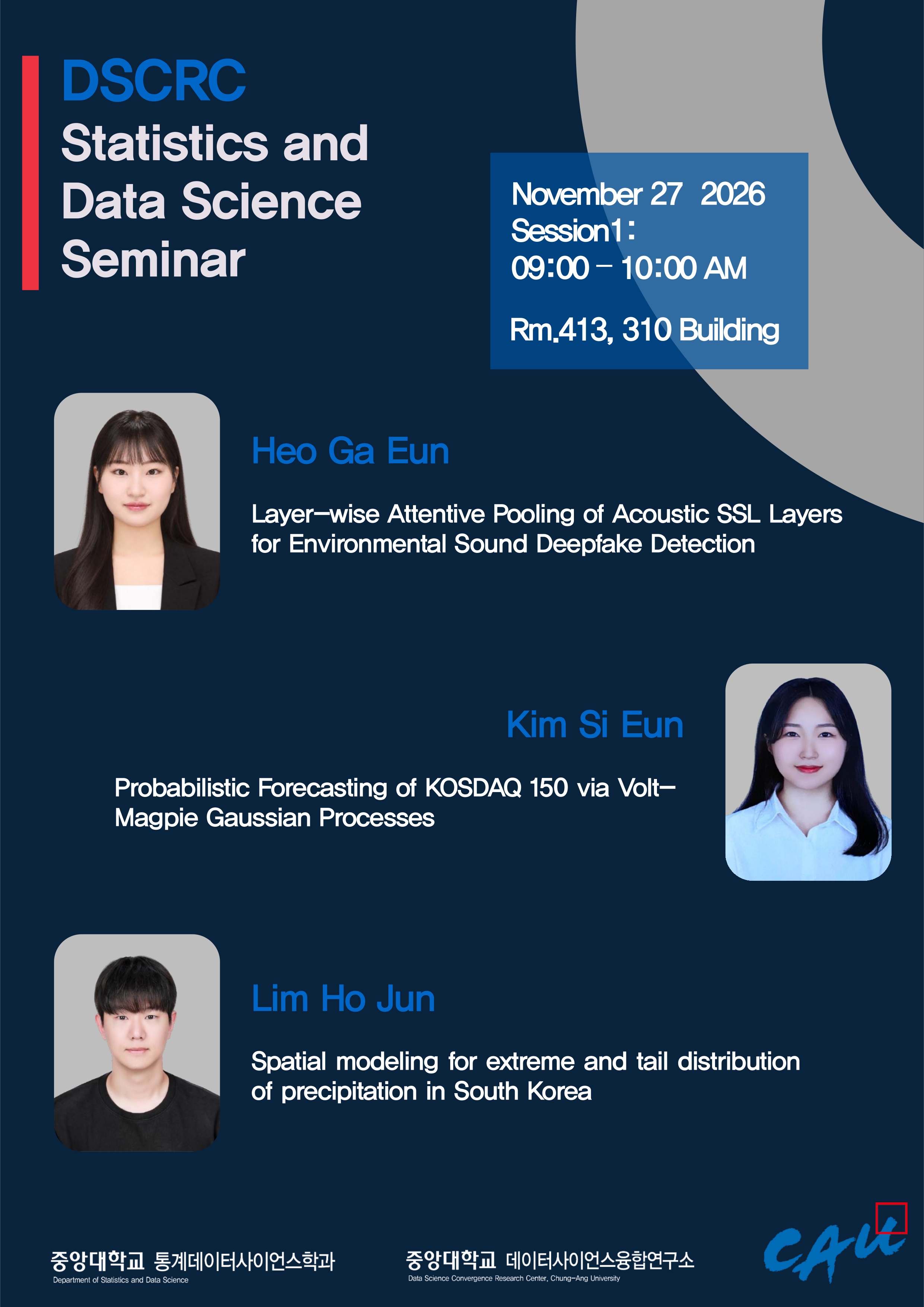
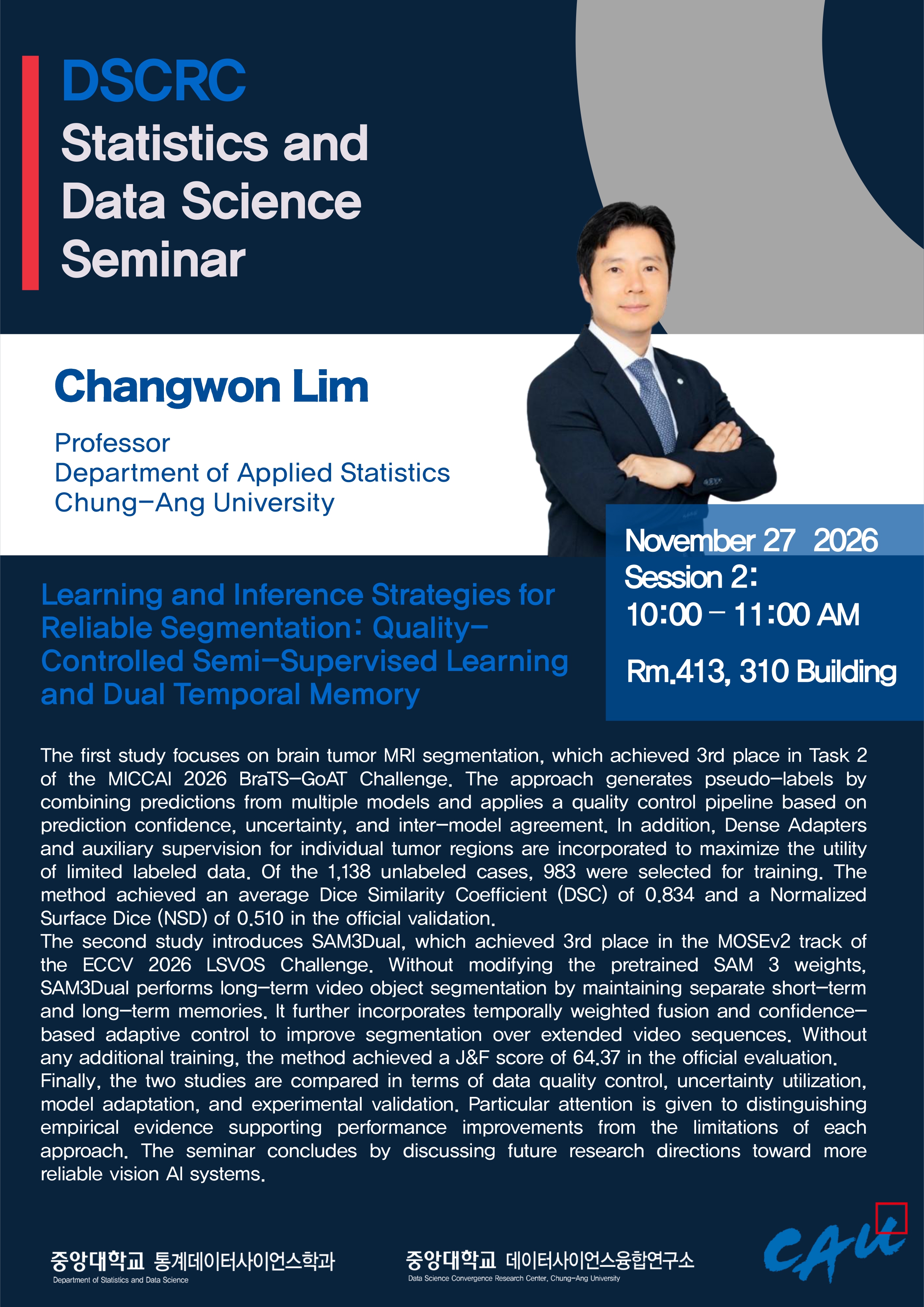
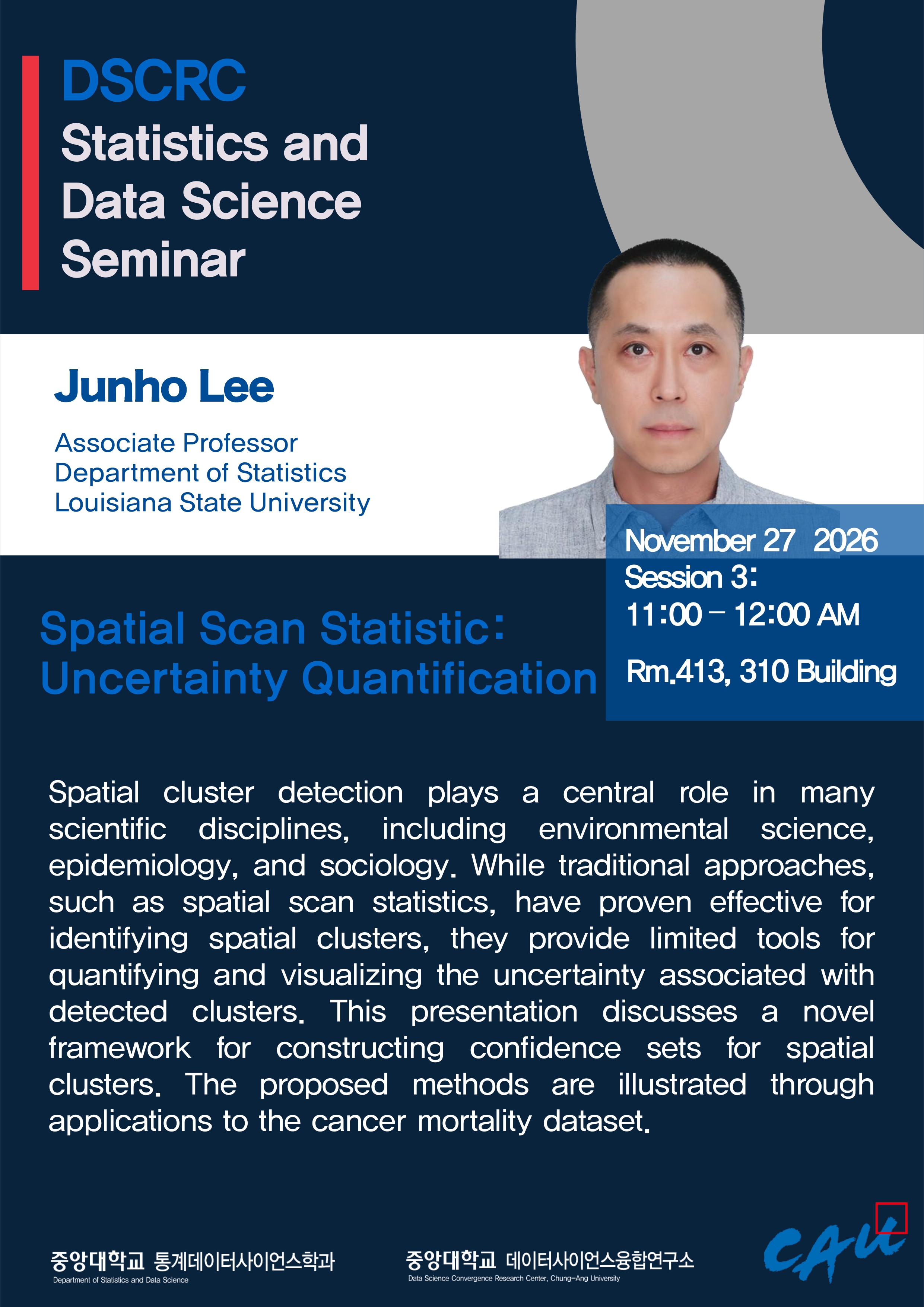
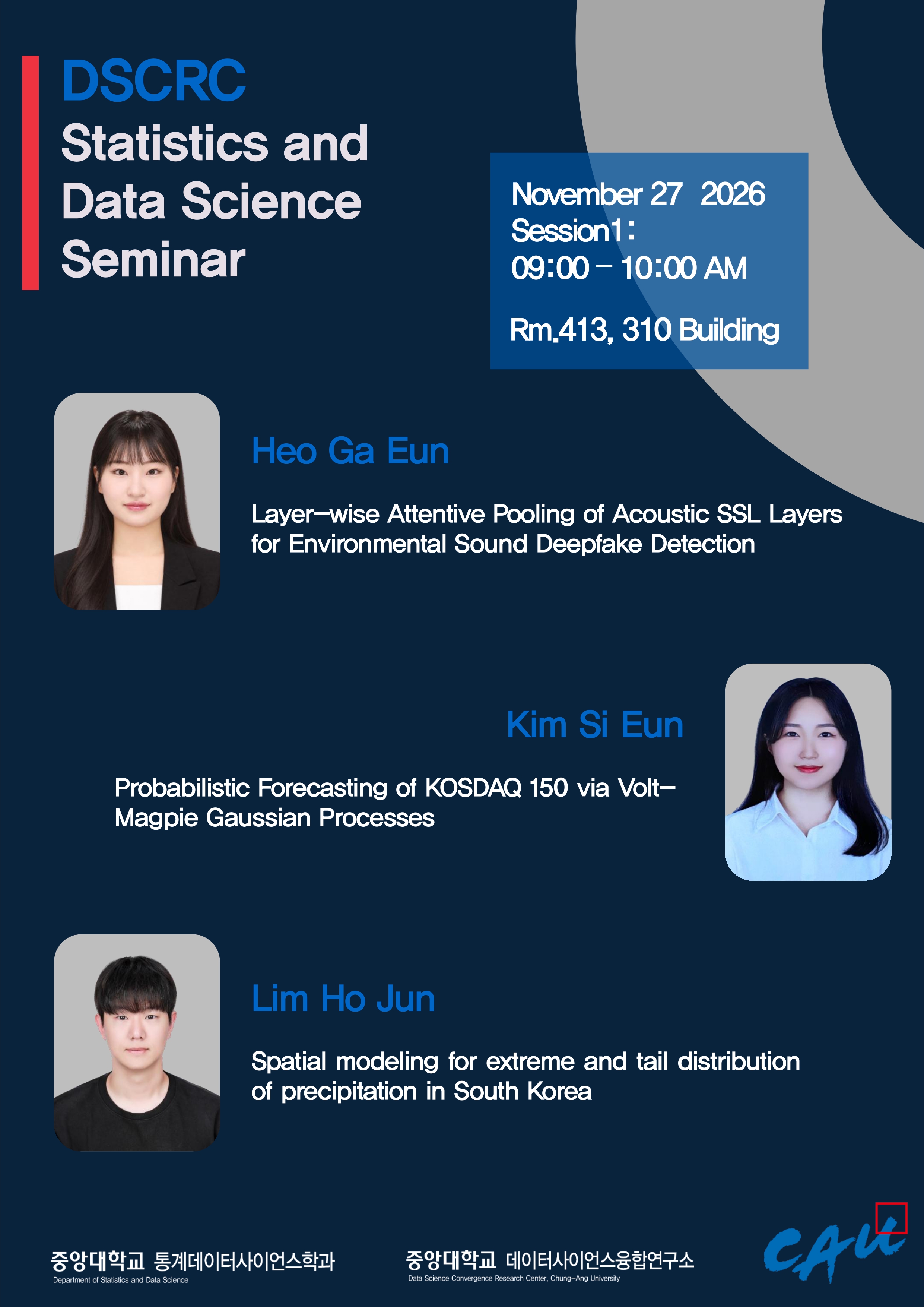
중앙대학교 데이터사이언스융합연구소에서 2026년 11월 27일 Seminar를 개최합니다.
일시 : 2026년 11월 27일 9:00-12:00 PM
장소 : 310관 413호
Session1:
1. Heo Ga Eun M.S. Candidate, Department of Statistics and Data Science, Chung-Ang University
Layer-wise Attentive Pooling of Acoustic SSL Layers for Environmental Sound Deepfake Detection
Generative audio models can now synthesise environmental sounds such as sirens, fire alarms and footsteps at a fidelity that ordinary listeners cannot distinguish from field recordings. An environmental-sound deepfake falsifies whether an event occurred, creating a distinct class of harm that includes lending false credibility to manipulated video and fabricating acoustic evidence. This thesis addresses Track~1 of the ICASSP 2026 Environmental Sound Deepfake Detection Challenge, which evaluates generalisation to generators unseen during training.
Current detectors pair a self-supervised learning (SSL) front-end with a discriminative back-end such as AASIST, but forward only the front-end's final layer and discard the remaining eleven. This is a convention rather than a justified choice: the final layer is optimised for the pre-training objective, not for detecting synthesis artefacts. Prior layer-wise analyses report that lower layers are more discriminative for deepfake detection, but are confined to speech SSL models, treat environmental sound as peripheral, and fuse layers by an input-independent weighted sum. This study addresses all three limitations at once by adopting an acoustic SSL front-end (BEATs) and replacing the weighted sum with Layer-wise Attentive Pooling (LAP): input-adaptive SE gating followed by max-pooling along the layer axis.
The proposed model reduces the Equal Error Rate on EnvSDD Track~1 from 6.02% to 2.78%, a relative reduction of 53.8%. A control with a constant gate reaches 4.62%, so 1.84 of the 3.24 percentage points (56.8%) are due to the active gate. The improvement holds across generators: the standard deviation across the three unseen generators falls from 2.72 to 1.23 and the worst case from 8.55% to 3.40%. A layer-usage analysis shows that 89.9% of the pooled elements come from non-final layers, and the lowest layer alone accounts for 36.7%. Forwarding only the final layer is therefore not the best choice for environmental-sound deepfake detection.
2. Kim Si Eun M.S. Candidate, Department of Statistics and Data Science, Chung-Ang University
Probabilistic Forecasting of KOSDAQ 150 via Volt-Magpie Gaussian Processes
Financial time series generally exhibit nonstationarity, with trends and volatility that vary over time. However, Gaussian process (GP) models with stationary kernels and constant or linear mean functions may have limitations in adequately capturing these characteristics. In this study, we apply a GP model that combines the Volt kernel, which reflects volatility-driven predictive uncertainty, with the Magpie mean function, which captures time-varying trends, to the Korean KOSDAQ market and evaluate its performance in long-horizon probabilistic stock price forecasting. In the empirical analysis, five forecasting models are compared using KOSDAQ 150 constituents, and stocks are further classified into uptrend, range-bound, and high-volatility groups according to their price movement characteristics. Predictive performance is evaluated based on negative log-likelihood (NLL) and calibration. The results show that Volt-based models perform relatively well for the overall sample and for the uptrend and high-volatility groups, whereas the model combining a Matérn kernel with a Magpie mean function performs better for the range-bound group. These findings indicate that the relative strengths and limitations of kernel–mean function combinations vary across stock groups defined by observed price dynamics in this study. Future research could apply the same stock classification criteria and forecasting and evaluation procedures to other stocks and separate, non-overlapping evaluation periods to assess whether the observed performance differences are specific to the stocks and period examined.
3. Lim Ho Jun M.S. Candidate, Department of Statistics and Data Science, Chung-Ang University
Spatial modeling for extreme and tail distribution of precipitation in South Korea
In this study, we analyze Korean precipitation data using two complementary spatial modeling frameworks. First, we investigate annual maximum precipitation by adopting statistical models for spatial extremes, including latent variable and copula-based approaches, to capture its heavy-tailed behavior as well as spatial dependence. Second, we adopt spatial quantile regression to characterize the tail behavior and examine the spatial distribution of extreme quantiles of precipitation. These methods provide complementary results for exploring the tail behavior of precipitation while accounting for spatial dependence.
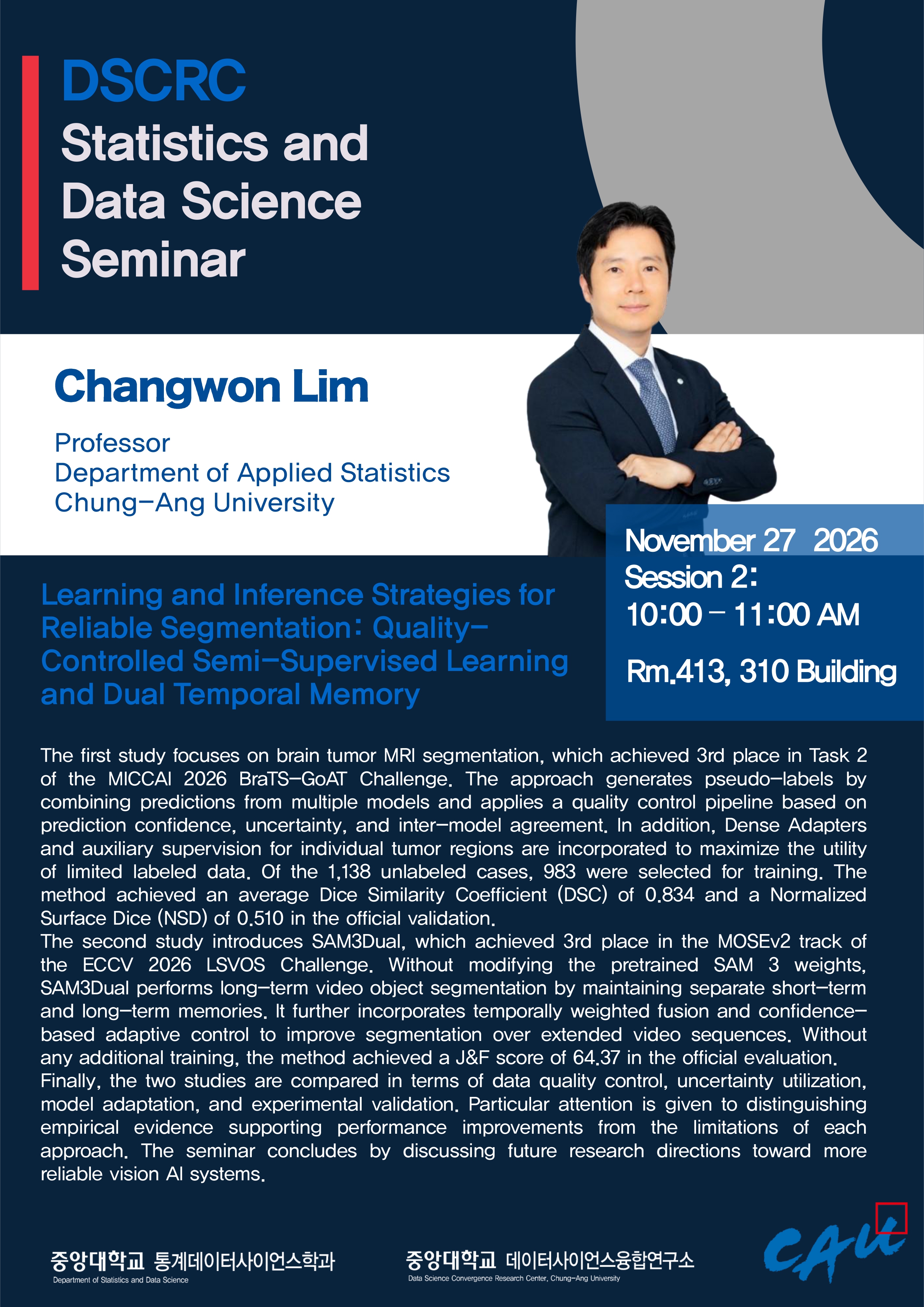
Session2:
Changwon Lim Department of Applied Statistics, Chung-Ang University
Learning and Inference Strategies for Reliable Segmentation: Quality-Controlled Semi-Supervised Learning and Dual Temporal Memory
The first study focuses on brain tumor MRI segmentation, which achieved 3rd place in Task 2 of the MICCAI 2026 BraTS-GoAT Challenge. The approach generates pseudo-labels by combining predictions from multiple models and applies a quality control pipeline based on prediction confidence, uncertainty, and inter-model agreement. In addition, Dense Adapters and auxiliary supervision for individual tumor regions are incorporated to maximize the utility of limited labeled data. Of the 1,138 unlabeled cases, 983 were selected for training. The method achieved an average Dice Similarity Coefficient (DSC) of 0.834 and a Normalized Surface Dice (NSD) of 0.510 in the official validation.
The second study introduces SAM3Dual, which achieved 3rd place in the MOSEv2 track of the ECCV 2026 LSVOS Challenge. Without modifying the pretrained SAM 3 weights, SAM3Dual performs long-term video object segmentation by maintaining separate short-term and long-term memories. It further incorporates temporally weighted fusion and confidence-based adaptive control to improve segmentation over extended video sequences. Without any additional training, the method achieved a J&F score of 64.37 in the official evaluation.
Finally, the two studies are compared in terms of data quality control, uncertainty utilization, model adaptation, and experimental validation. Particular attention is given to distinguishing empirical evidence supporting performance improvements from the limitations of each approach. The seminar concludes by discussing future research directions toward more reliable vision AI systems.
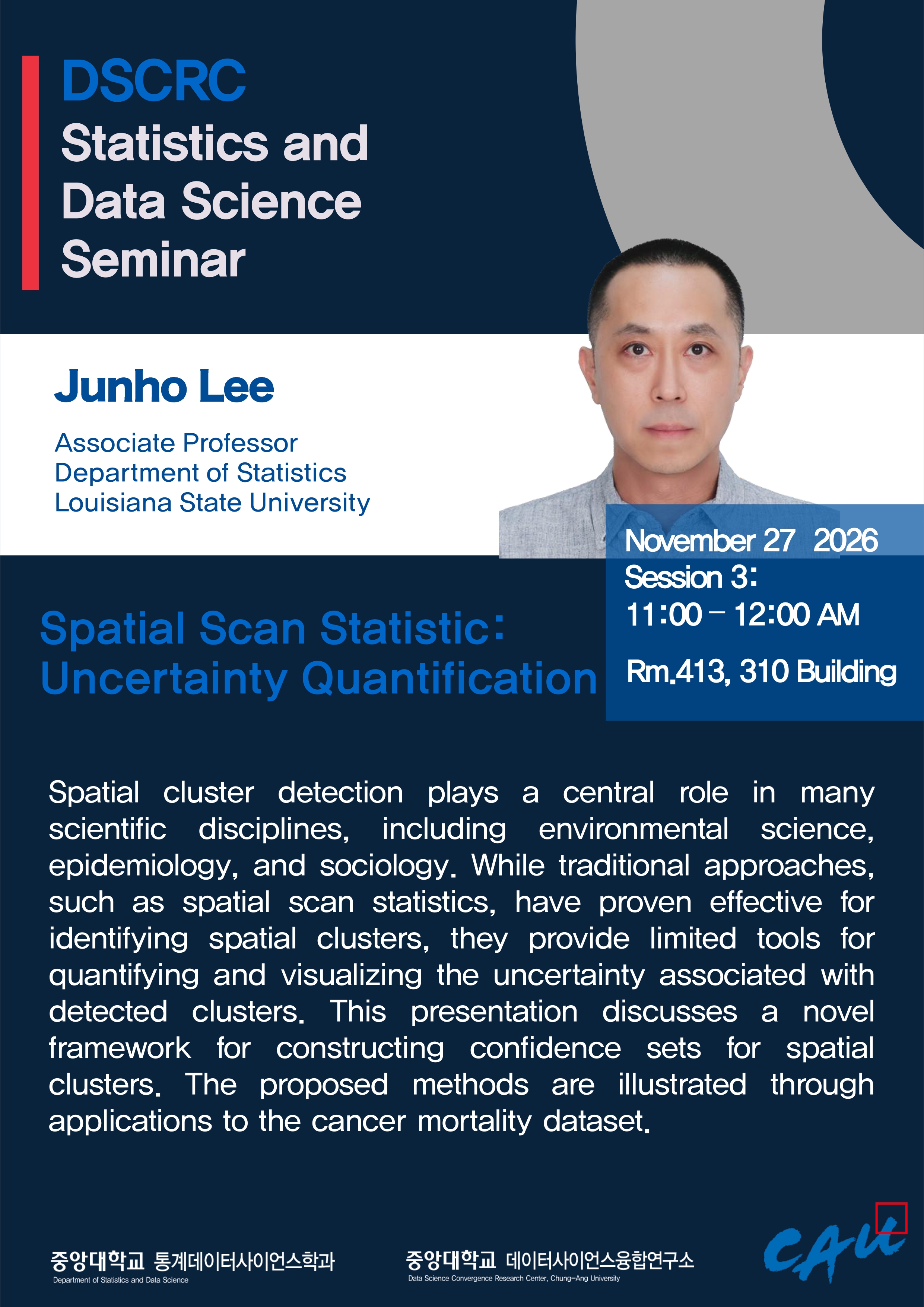
Session3:
Junho Lee Department of Statistics, Louisiana State University
Spatial Scan Statistic: Uncertainty Quantification
Spatial cluster detection plays a central role in many scientific disciplines, including environmental science, epidemiology, and sociology. While traditional approaches, such as spatial scan statistics, have proven effective for identifying spatial clusters, they provide limited tools for quantifying and visualizing the uncertainty associated with detected clusters. This presentation discusses a novel framework for constructing confidence sets for spatial clusters. The proposed methods are illustrated through applications to the cancer mortality dataset.